
Incorporating Reuse in Climate Plans
Recommendations for supporting reusable packaging & foodware in climate plans for US states, territories, local governments, and Native nations.

Introduction

As more US states, municipalities, territories, and Native nations develop or update their climate plans, incorporating reuse policies, programs, and funding will address the true impacts of their consumption and deliver stronger results.
Today’s “throw-away” economy has significantly contributed to the 90% increase in global carbon emissions since 1970. How we package, use and dispose of products can have major implications for greenhouse gas (GHG) emissions. To live within our planetary boundaries as defined by the International Panel on Climate Change (IPCC), the Oregon Department of Environmental Quality (DEQ) estimates that a 90% reduction in per capita GHG emissions is needed on an aggressive timeline. Applying these estimates to the packaging sector would be like taking 530 million cars permanently off the road!
Recycling will not solve this problem for us. Oregon DEQ estimates that even if recycling were universally adopted and conducted flawlessly throughout the United States, it could only deliver 31% of the needed 90% GHG emissions reductions for the packaging sector. Meanwhile, the Ellen MacArthur Foundation estimates that a scaled reusable packaging and foodware system using shared infrastructure can reduce a city’s packaging-related GHG emissions by up to 70%.
The data are clear: Reuse must play a key role in addressing climate change. Reusable products and packaging offer significant reductions in raw materials harvested, extracted or mined, lower GHG emissions from manufacturing and transportation, and less material sent to landfills and incinerators.
Climate plans represent commitments by communities, municipalities, states, and Native nations to reduce their GHG emissions. Now more than ever, we must strengthen these commitments to slow the pace of climate change. As more US states, municipalities, territories, and Native nations develop or update their climate plans, incorporating reuse policies, programs, and funding will address the true impacts of their consumption and deliver stronger results. Here, you will find recommendations for supporting reusable packaging and foodware in climate plans for US states, territories, local governments, and Native nations.
A Just Transition to the Reuse Economy
These recommendations should be considered and implemented with an eye toward environmental justice. Reuse is not new. Indigenous and marginalized groups have used reuse systems for generations, both as a necessity and frankly, because it makes sense. These same communities have been and will continue to be affected disproportionately by polluted air, contaminated water, and proximity to landfills due to the manufacture of single-use products. At this moment, when the manufacture of plastic and other single- use items are increasing, they stand to lose even more if bold steps are not taken to reverse or slow down the accelerating threat of climate change.
Transitioning to a just, sustainable, low carbon economy is possible through the implementation of reuse systems for packaging and foodware. A just transition focuses on creating opportunities for the most impacted communities, ensuring that new green jobs are accessible, and providing support for workers displaced by the shift to sustainable practices. By building reuse into the framework of a just transition, we can create a more inclusive, sustainable future that benefits both people and the planet.
For example, canners in Portland, OR, who are often unhoused or lower income, spend hours traveling the city each day collecting bottles and cans for redemption. Though canners help keep our cities clean of waste, there is a stigma connected to them and their work. As part of the informal waste economy, canners are not protected by labor laws; they are not paid for their time; and they have little to no say in how the beverage container redemption system operates.
Canners fill a need in our waste system and are part of the solution to low recycling rates, helping cities meet their environmental goals. As a result they should be given opportunities to fully participate in the waste management system. When developing a local reuse system, or including reuse in Extended Producer Responsibility (EPR) and/or Deposit Return System (DRS) policy, including canners would open up the potential for job training opportunities, job placement, and protections currently unavailable to them. Partnering with and formalizing their role in collection, cleaning and redistribution, can ensure a just transition via a reuse system.
Further, when reuse is included in high school and college cafeterias and curricula, as recommended in this document, reuse becomes normalized and also prepares students for jobs in an equitable economy. As part of Upstream’s Reuse in a Just Transition series, we spoke with Natasha Wayne at Reaching All Minds Academy in Durham, NC on the benefits of using reusable trays and utensils at the school:
Giving [students] that foundation within the school is really important to us, and we've worked hard to help them understand that this is just the way you do things… The workforce development component really is not about what we're building in the workforce right now, but what we're going to be able to offer to the workforce in eight to 10 years, when our students are starting to apply for their first jobs in high school and after graduation.
By including reuse in climate plans and transitioning to a just, sustainable economy, we are creating the world we want future generations to thrive in.
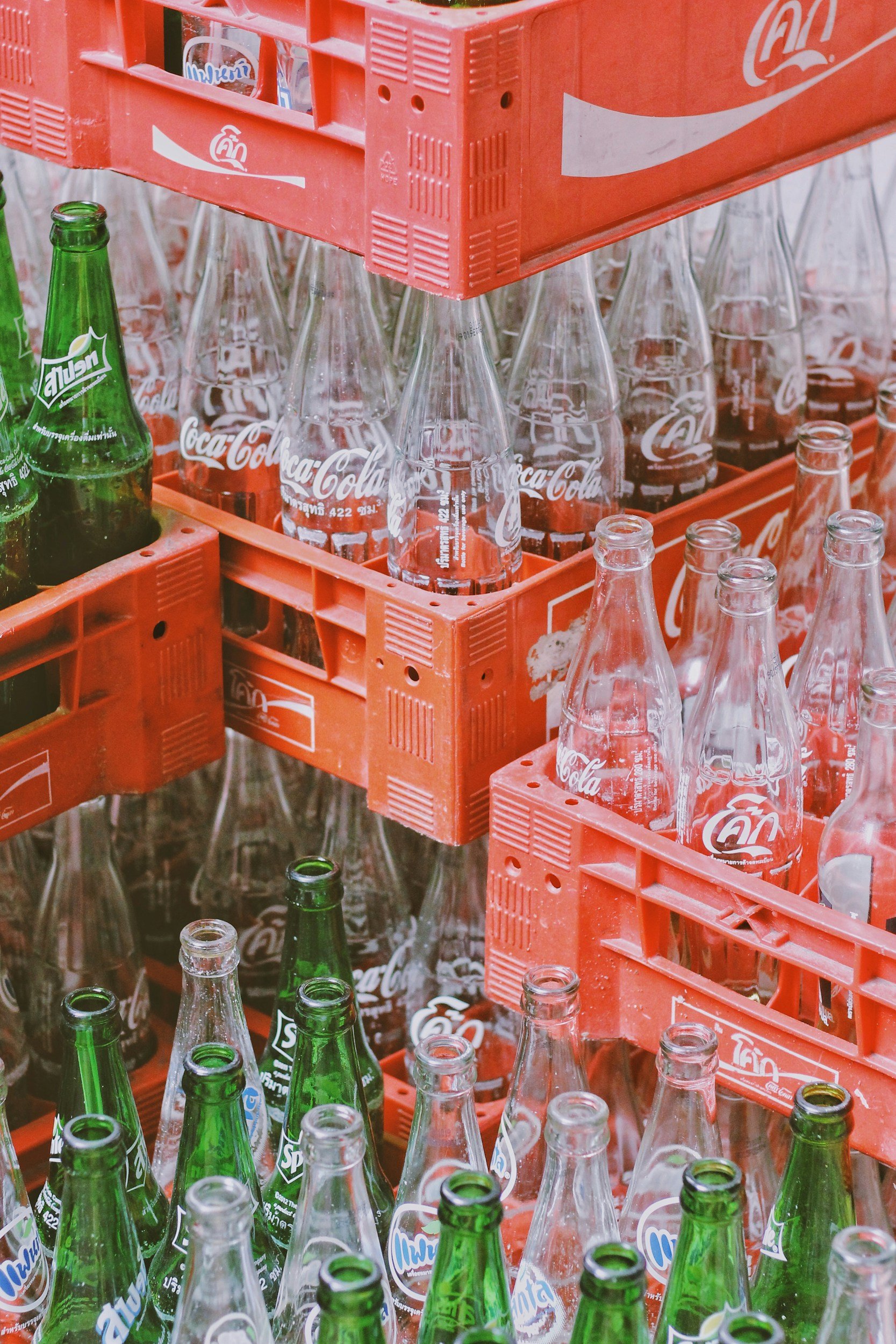
Transitioning to a just, sustainable, low carbon economy is possible through the implementation of reuse systems for packaging and foodware.
Ensuring Reuse Optimizes Climate Protection

While reuse typically leads to climate benefits, in the context of climate plans, the goal should be to implement reuse strategies that maximize GHG reductions. Where single-use products have a climate impact at each step in their life span, reuse strategies reduce consumption-based greenhouse gas emissions by minimizing the need for producing new materials and products. By extending the lifecycle of products and packaging through reuse, these systems lower emissions associated with resource extraction, manufacturing, and transportation. This approach also reduces waste sent to landfills, further decreasing methane emissions and contributing to a more sustainable system.
It’s important to note that not all reuse options deliver the same benefits. In an ideal world, reuse programming (and all other actions) for the purpose of climate mitigation should be accompanied by explicit performance goals and periodic assessment of climate outcomes. This will help program implementers ensure that reuse programs are designed to optimize climate benefits, and that periodic evaluation is performed so programs can be fine-tuned and improved over time. While this approach isn’t practical in all cases, it should be viewed as a best practice.*
Reuse is a broad term, and there are many potential applications of reuse systems within climate planning, including repair and resale for products such as furniture and electronics, building and construction materials, and textiles, all of which are already included in many government climate plans. For example, a 2024 Reusies® Winner, Maryland Durable Medical Equipment Reuse Program, collects, sanitizes, repairs and redistributes donated medical equipment to Marylanders in need free of charge.
While projects like this are also beneficial in climate plans, the scope of these particular recommendations is limited to packaging and foodware systems. After all, nearly one trillion disposable food and beverage packaging items are used each year in the US, comprising 67% of litter found in the environment. As the saying goes, ‘if you can’t measure it, you can’t improve it’. By incorporating these recommendations for reusable food ware and packaging into climate plans, governments can fully account for GHG emissions, address waste management challenges, and begin to have an impact on the climate crisis.
*For an example, consider the “waste prevention and reuse fee” in Oregon’s Plastic Pollution and Recycling Modernization Act (Oregon Revised Statutes 459A.941). This law requires the packaging and food serviceware producer responsibility organization to pay a “waste prevention and reuse fee” to the state of Oregon, which shall use the revenue to “establish a program to reduce the environmental impacts of covered products through means other than waste recovery, including waste prevention and reuse.” Note that the objective of the program is explicitly to “reduce environmental impacts”, not “reuse for the sake of reuse”. In providing grants and loans for programs, the state must consider criteria including “the environmental benefits of the program”.
Recommendations
Note: Some of the examples provided in these recommendations are outside of reuse infrastructure and systems but are included to illustrate where there is potential to include reuse language in a climate plan. You can find hundreds of examples of reuse in action via Upstream’s Case Study Explorer.

All (Government-wide)
-
Develop and implement procurement policies for public buildings and offices that include targets for reusable foodware and packaging, just as government agencies might implement sustainable purchasing policies for equipment, appliances, furniture, and supplies to be reused, repaired, refurbished, or donated. In addition, work to include reuse service providers on government contracts.
Examples
MA: Executive Order to Establish an Environmental Purchasing Policy — An Executive Order that requires state agencies to procure Environmentally Preferable Products and Services (EPPS), that include, among other things, recycled materials, minimized waste, and energy or water conservation
PA: Sustainable Procurement Policy for Allegheny County — A County Council ordinance requiring the procurement of environmentally preferable products
Offer expedited permitting, lighter reporting, savings from bulk purchasing agreements, green purchasing grants, or other incentives to municipalities that adopt procurement policies that include reusable foodware and packaging targets for public buildings and offices.
Example
MA: Green Communities Designation & Grant Program— A Green Community designation qualifies municipalities for grants and technical support for clean energy projects
-
Create or update an existing consumption based emissions inventory (CBEI) and develop time-bound targets for overall reduction of scope 3 emissions across sectors. Accounting for scope 3 emissions gives a fuller picture of overall emissions, which includes raw material extraction, consumption, and disposal or reuse of a product regardless of where the activities occur. The EPA also has a tool to help states develop greenhouse gas (GHG)emissions inventories.
Examples:
WA: Greenhouse gas emissions data - King County, Washington — A 2022 report of greenhouse gas emissions data of the Puget Sound region
IN: Consumption-Based Greenhouse Gas Emissions Results for the State of IN for 2012-2019 — A summary of CBE results for Indiana, 2012-2019
NE States: Consumption Based Green House Gas Inventories — Northeastern States — An EPA report on the CBEs of eight Northeastern states, including the models and methods used to calculate the inventories
OR: Sustainable Consumption and Production program — The city of Portland has a program that partners with the community to help residents and local businesses to consume sustainably.
OR: Setting consumption- based emission reduction goals — An excerpt from a technical report from the Stockholm Environment Institute on setting consumption based emission goals in Oregon — includes global case studies.
Community & Economic Development
-
Develop and offer a technical assistance program to connect people and communities in the state with resources to implement reusable packaging and foodware system projects (e.g. installing dishwashers, switching to reusables, organizing community reusable foodware borrowing systems). This can be staffed by state employees, volunteers, or third party contractors.
Examples:
MA: RecyclingWorks — A recycling assistance program that helps businesses and institutions reduce waste, recycle and maximize reuse and food recovery opportunities
CA: Reusable Transport Packaging — StopWaste’s Use Reusables campaign offers resources, advice, and funding to help businesses make the switch to reusable packaging
-
Develop financial incentives (grants, tax breaks, subsidies, rebates, low interest loans, award competitions, development incentives, green bonds) for reuse service providers, businesses, or non-profits who want to offer reusable packaging and foodware, manufacture reusable packaging and foodware, or provide reuse services—such as washing and logistics. Incentives should cover full project costs including labor, containers, provider's time, and return bins.
Examples:
US & Canada: Reuse Incentives and Grants Tracker — Upstream’s Funding Tracker monitors incentives and grants offered by municipalities, states/provinces, federal governments and private sources that could be used for reuse projects
MA: Massachusetts Department of Environmental Protection (MassDEP) Reduce, Reuse, Repair Micro-Grant — Grants of up to $10,000 are provided for short term reuse and repair projects
DC: Ditch the Disposables — Washington, DC’s Department of Energy and Environment provided grants to support restaurant’s transition to reusable food ware and dish washing capacity
CA: LA's Reusable Foodware Program — Los Angeles, CA provided microgrants to food service establishments to purchase reusable food service ware and accessories
CO: Reuse Incentives for Local Businesses — Boulder, CO offers a one time refund to business for buying reusable solutions and funding towards reusable takeout containers for restaurants
-
Commit to encouraging and supporting the hospitality sector (lodging, food & beverage, entertainment) in making voluntary changes to adopt reusables, or amending business licensing processes to require reuse where food and beverages are served.
Examples:
CO: Reuse Denver Incentives — City program that provides funding and support for food service providers who want to switch to reuse for on-site dining
FL: Florida Green Lodging Program —This program offers technical assistance and resources to hotels that earn the green lodging designation
CAN: Zero Waste Action Plan | Banff, AB — Banff’s Zero Waste Plan includes working with hotel sector to improve waste diversion rates
Community & Stakeholder Engagement
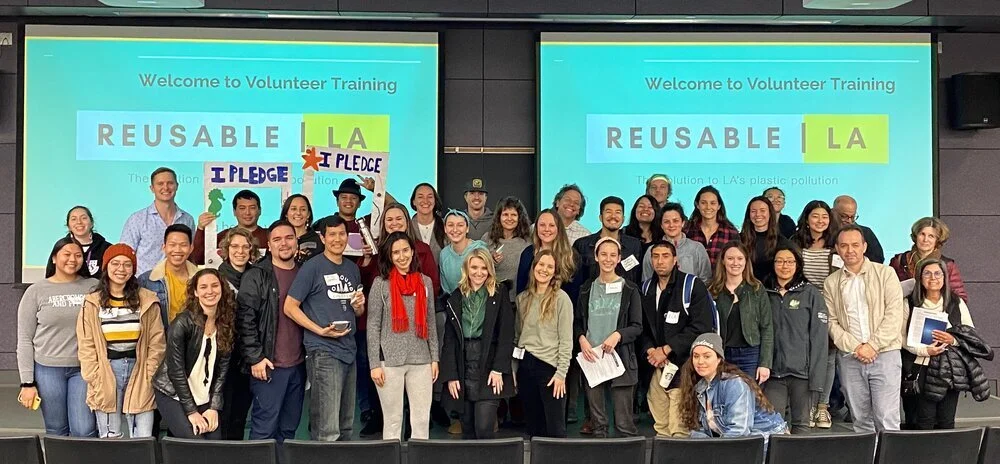
Image: Reusable LA
-
Conduct a public education and behavior change campaign promoting packaging and foodware system waste reduction and conscious consumption — connecting consumerism to the climate emergency with a focus on reuse as a solution. Educational campaigns on reuse are most effective when accompanied by reuse systems and opportunities for the public to participate, so pair this with another action (or more) from the list.
Examples:
WA: Bring your own cup — Washington State Department of Ecology — A campaign to encourage people to bring a reusable cup, alongside education on the benefits of reuse
WA: Use Food Well: Become an Expert at Reducing Food Waste — Though not for reuse, this campaign educates households on reducing food waste, and could be used as an example for reuse education
MN: Zero Waste Challenge | Hennepin County — A campaign to help residents minimize their waste
-
Offer to host a network of reuse stakeholders or support and join existing community-led reuse coalitions and environmental justice groups.
Examples:
MA: Massachusetts Department of Environmental Protection (MassDEP) Reduce & Reuse (R&R) Working Group — MassDEP offers a forum and listserv to discuss reuse policies and programs in the state
US: Environmental Justice Communities Against Plastics — A coalition dedicated to plastic pollution and prioritizing the needs of frontline communities
FL: Zero Waste Miami — Zero Waste Miami is working with the community to develop a Waste Prevention Strategy and maintains a resource hub for funding, events, policy and a reuse service providers directory.
For dozens more examples, check out Upstream’s directory of reuse community groups and coalitions
School Districts & Universities
-
Incorporate reuse economy and consumption based emissions curricula into high school, technical college, community colleges and university courses, to normalize reuse and begin to train a new generation of reuse professionals.
Examples:
IL: Governors State University (GSU) — Through the IL Higher Education Green Jobs and Technology Act, GSU has added degree programs and course offerings to prepare students for the green jobs of tomorrow
CA: San Francisco State University (SFSU) — SFSU revised graduation requirement to incorporate climate justice
AZ: Arizona State University (ASU) — ASU added a required sustainability course to its general education curriculum
-
Develop financial incentives for schools, including universities and K-12 schools, who convert to reusables for onsite dining or otherwise support local reuse systems. Financial incentives can include tax breaks, subsidies, rebates, low interest public loans, award competitions, development incentives, green bonds, or grants, such as a grant to support K-12 schools with the purchase of energy-efficient commercial dishwashers or the hire of a third party warewashing service.
Examples:
CA: Commercial Dishwasher Grant—California Department of Education offered grants to public school districts, direct funded charter schools and county offices of education for the purchase of commercial dishwashers
WA: Waste Not Washington School Awards— This award program provides funding for schools to build an expand waste reduction, reuse, recycling and composting programs
CA: Reusable Foodware Cafeteria Grants | StopWaste - This program provides grants for closed environments with cafeteria-style dining in Alameda County, CA.
Partner with a reuse service provider and/or NGO to implement reusable packaging and foodware in schools. Many schools have partnered with NGOs such as the Center for Environmental Health and ReThink Disposable for assistance converting to reusables. In some cases, where there is not capacity or space to wash onsite, schools have also partnered with a third-party warewashing provider. For more resources visit Upstream’s Reuse in Schools page. Plastic Free Restaurants offers a subsidy to any food service establishment that wants to switch to reusables and is not required by law to eliminate single-use plastic.
Examples:
MA: Walpole Public Schools’ Sustainable Transformation with Re:Dish — A case study of two Boston schools partner with reuse service provider, Re:Dish to switch to reusable packaging in their cafeteria
MN: The Cost and Environmental Benefits of Using Reusable Food Ware in Schools — A case study of two Minnesota middle schools who used a state grant to purchase reusable utensils, trays, and wash and storage infrastructure to switch from disposables to reusables
Legislative Action
-
Pass a “gateway” policy to reuse, such as Skip the Stuff (STS), wherein takeout accessories, such as cutlery, napkins, condiment packages, straws, etc. are only available upon request from restaurants and businesses. Ensure that outreach is conducted in multiple languages to reach restaurants owned and operated by non-english speakers, and signage is available in multiple languages for all customers.
Examples:
-
Pass reuse-in-lodging policy that requires hotels to replace single-use toiletry bottles with refillable containers, use reusable foodware for onsite dining in the hotel property, and provide refillable water bottle stations throughout the property.
Examples:
IL: Requires hotels to transition from single-use toiletries to bulk refillable dispensers
CA: Watsonville policy bans small plastic bottles and requires bulk dispensers of personal care products
WA:Mini Toiletries in Lodgings Law —This law requires lodging establishments to provide personal care products in small plastic containers to guests only upon request and encourages businesses to switch to refillable containers
-
Enact a statewide policy to require water refill stations in new public and commercial construction.
Examples:
WA: Washington Plastic Pollution Reduction Act — A plastic pollution reduction policy that mandates a bottle refill station for each required water fountain
CA: Increasing availability of public drinking water | San Luis Obispo — A city policy to increase the availability of drinking water in public places
-
Pass (or update existing) Deposit Return System (DRS) policy with beverage sector reuse targets and funding to establish reuse infrastructure for the beverage sector.
Examples:
CA: Reusable Beverage Containers Infrastructure Grant Program — A grant program from CalRecycle that provides funding for infrastructure and start-up costs for a Bottle Washer Processor
ME: Behind the Scenes: How Maine Modernized the Bottle Bill — A look at how Maine updated their Bottle Bill to address current and future needs
Pass packaging Extended Producer Responsibility (EPR) policy with reuse targets and funding to establish and operate reusable packaging and foodware infrastructure that can be shared by all producers.
Consider best practices as described here. For the best reuse outcomes, this legislation should be enacted at the same time as a Deposit Return System if one is not already in place. For an overview of the state of EPR in the US, see here.
Examples:
CA — SB54 mandates that consumer brands convert at least 4% of all packaging sold into the state into reusable formats by 2032.
MN and WA — HF3911 (MN) and E2SSB 5284 (WA) both differentiate between returnable and refillable packaging and require producers to establish targets for the conversion of single-use packaging to returnable reusables, along with establishing explicit return rates. These laws also create clear financial incentives for producers to convert their packaging to reusable formats.
OR: The Plastic Pollution and Recycling Modernization Act creates a statewide fund using producer dollars aimed at reducing the environmental impacts of packaged goods, including by supporting the creation of reuse systems.
-
Pass a Reuse-for-Onsite Dining (ROD) policy to require reusable foodware at dine-in establishments, schools, offices or other buildings where food is served. Additionally, all new construction or renovations should be required to include dishwashers.
Examples:
CA: Disposable Foodware Ordinance | Half Moon Bay — Requires reusable foodware for food served for onsite dining
ME: Single Use Plastic Foodware Ordinance | York – Requires reuse for onsite dining where washing facilities exist.
WA: Municipal Code Compostable and Reusable Foodware | Shoreline — Municipal code requires reusable foodware for on-site dining, including condiment containers
CA: Reduction of Waste from Single-Use Articles and Expanded Polystyrene Products Ordinance – Los Angeles County ordinance requires reuse for on-site dining, single-use accessories upon request, prohibits styrofoam, and requires recyclable or compostable containers for ready-to-eat food
-
To create cost parity between reusables and single-use items, tax businesses on the procurement of single-use packaging and foodware.
Examples:
Ireland: Plastic Bag Levy – Retailers collect a 22 cent levy per bag that then goes into a Circular Economy Fund to support waste reduction initiatives like reuse.
DC: Skip the Bag, Save the River – Retailers are required to charge 5 cents per bag (paper or plastic). Businesses must remit 4 cents to the Office of Tax & Revenue that goes into a Bag Fund that supports river cleanup.
Portugal: Contribution on Single Use Plastic Packaging – A .30 euro per package charge for single use packaging in ready-to-eat meals. This applies to production, importation, or intra-EU acquisition of single use packaging.
In conjunction with or following food code updates and reuse-for-onsite dining policies, consider a fee for single-use cups and containers, or retail bags.
Fees on single use cups and containers have been enacted in 10+ jurisdictions across the US and Canada, with varying degrees of success. Upstream’s Reuse Solutions Network reflected on the state of these policies and lessons learned in 2024, concluding that cup and container fees are best combined with supportive reuse enabling policies, such as modernized food codes to allow BYO and required reuse for onsite dining. Fees on retail bags, including paper and plastic, are a popular choice for source reduction policies. While plastic bag bans are common, research has demonstrated that these may not be effective at reducing waste or catalyzing reuse, and sometimes result in increased plastic waste due to loopholes that allow for thicker “reusable” plastic bags. Upstream therefore recommends fees across all single-use disposable bags as a starting point for encouraging customers to carry reusable bags. Better yet, require retail businesses to offer reusable bag systems wherein customers can borrow reusable bags and return them to the store.
Examples:
CA: Single-Use Foodware Reduction Ordinance | Truckee — Requires food establishments to charge a $0.25 customer fee for each disposable cup and take out container
CA: Single-Use Foodware Rules | Berkeley — Requires a $0.25 fee for disposable cups
To encourage local governments to enact these policies, offer grant eligibility or other incentives to municipalities with reuse policies in place.
Example:
MA: Massachusetts Department of Environmental Protection Sustainable Materials Recovery Program Details: Recycling Dividends Program (RDP) — Municipalities are encouraged to adopt a Sustainable Purchasing Policy to be eligible for grants
-
Pass reuse-at-events policy requiring stadiums and large event venues to provide reusable cups and other foodwareas the default for all customers. Stadiums and large event venues cycle through reusables at a fast pace and high volume. The infrastructure built to support them acts as a catalyst for other businesses in the community to provide reuse options.
Example:
CA: Reusable Foodware and Litter Reduction Ordinance | Oakland — Requires a reuse system for large venues and events and reuse for on-site dining, including city facilities
Note: If policy changes are not possible, encourage reusable packaging and/or foodware at public events with financial incentives or technical support.
Planning & Development

-
Explore the TRUE (Total Resource and Efficiency) certification program for resources, tools, and planning for reuse in facilities and for events.
Examples:
MO: Soldiers Memorial | St. Louis — A city-owned museum became the first museum in the US to earn TRUE certification.
CA: Chou Hall | University of California, Berkeley — A public academic building on UC Berkeley campus achieved zero waste (case study)
US: Chart-Reuse case study: Facilitating TRUE Certification — Upstream — A case study examining how consulting firm All About Waste used Chart-Reuse to help their client earn TRUE Certification
Earn LEED Certification for Cities and Communities. The following credits under Materials and Resources specifically address reuse: MR Credit: Material Recovery, pg. 91; MR Credit: Responsible Procurement, pg. 89. The following examples are from the LEED Project Directory, a directory of all certified LEED for Cities and Communities projects.
Examples:
OH: City of Dayton — Earned LEED Cities Platinum by focusing on Materials and Resources and Quality of Life
TX: City of Carrollton — Achieved LEED Cities Gold certification
-
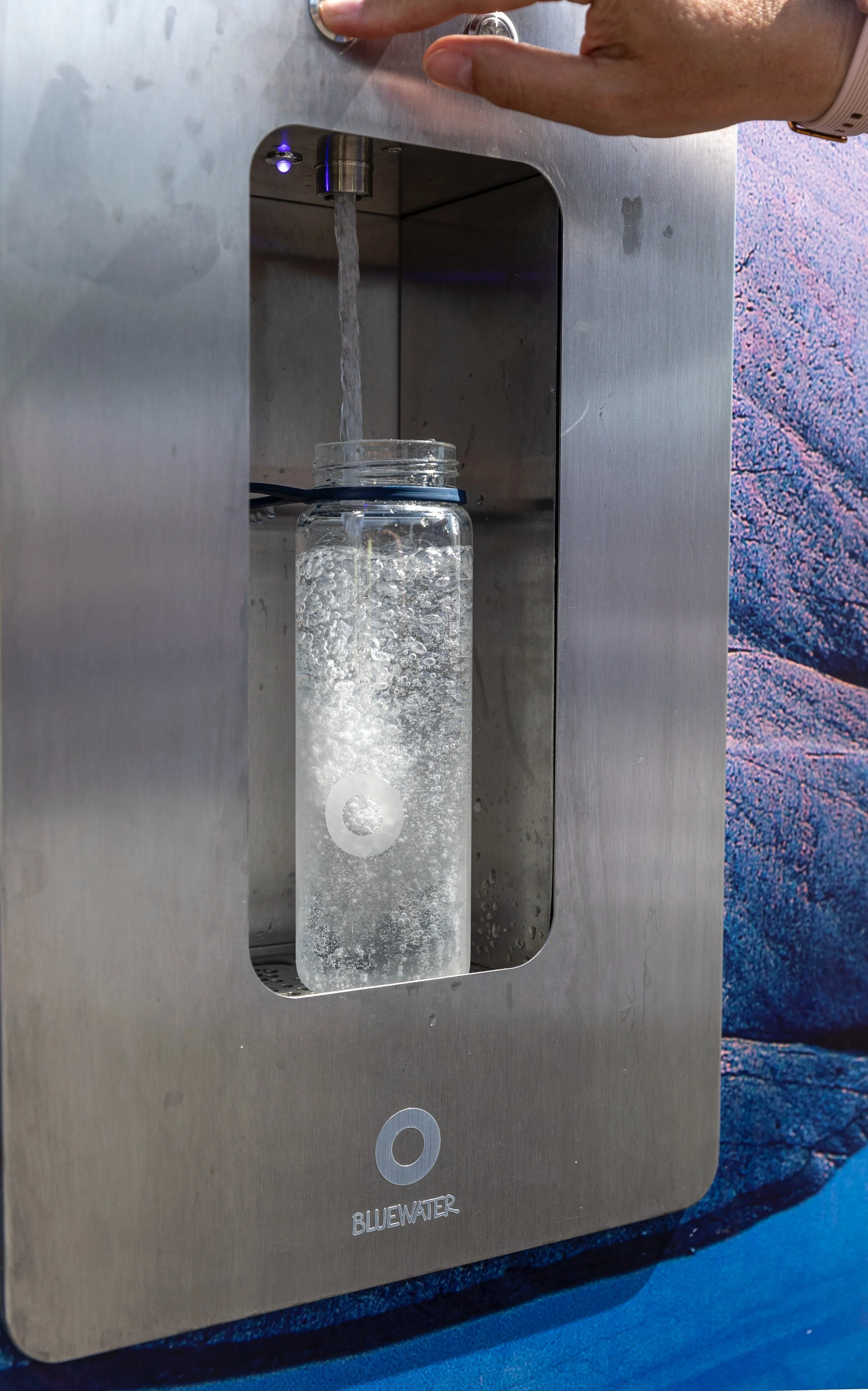
Place water refill stations at all public facilities, including, libraries, schools, parks, government buildings, and other public places. Include signage (in multiple languages, where appropriate) that encourages people to bring and refill their reusable bottles.
Examples:
IL: SB1715 requires water bottle refill stations in future public buildings
NH: 2024 New Hampshire Revised Statutes Title XV — Requires water bottle refill stations in all construction or renovation of school buildings

Public/Private Partnerships
-
Partner with a reuse service provider to offer reusable cups, containers and cutlery at public events. Also provide mobile (or stationary) water bottle refill stations. If you cannot directly partner with a reuse provider, offer funding for reuse services and water refill stations at events.
Example:
OR: The Water Station Project — The City of Eugene and Lane County Waste Management provide water bottle refill stations for regional public events
-
Partner with local organizations and businesses to implement a full-scale city wide reusable packaging and foodware program as a local utility. Ensure this service also covers local public institutions such as parks, prisons, hospitals, and libraries. Build one or more wash facilities that support food outlets within the city, and provide transport services to collect dirty reusables and re-distribute clean items. Examples of community partners include: chambers of commerce, non-profits, unions, worker co-ops, business incubators, local SBA offices, college and university organizations, etc.
Examples:
TX: Galveston — Perpetual has partnered with city government, local businesses and community groups to bring an open-loop reusable foodware system to Galveston
CAN: Vancouver, British Columbia — The City of Vancouver and Return-It partnered on a reusable cup program
If your municipality owns or contracts with one or more MRFs or haulers, explore options to collect reusables using their trucks and routes, and sort them as needed at their facilities.
Example:
CA: Cyclei — Cyclei and the City of Berkeley have partnered to collect reusables curbside
Health Department & Food Codes

-
Update your state’s food code and related guidance based on the latest FDA guidance, which allows for third-party warewashing of reusable containers as well as BYO for all beverages (not only water and coffee) and fresh food from restaurants, delis, event food trucks, bulk aisles and hot/cold bars.
Examples:
IL: Consumer-Owned Containers Guidance — Consumer owned container guidance allows BYO for bulk and ready-to-eat foods
ME: 2023 Food Code update — Maine’s updated food code allows for returnable reusables (pg. 5)
MA: Reusable Takeout Containers Guidance — A guide for best management practices for reusable takeout containers
For local governments: Advocate with your state food code administrators to push for an updated food code, or ask your state for the ability to offer variances under your existing code for reusable foodware. This could be done through guidance or a local ordinance. Though variances are generally used for technical food processes like canning, smoking, and curing, reusable foodware can also be included. Some cities offer variances to qualified entities providing reusable packaging and foodware systems.
Examples:
IN: Department of Health Variance Protocol — Describes the process for a food establishment to submit a request for a variance
MN: Minnesota Department of Agriculture Specialized Process Variances — Authorizes a modification or waiver to a requirement within the Minnesota Food Code
NC: DHHS Guidance for Requesting A Variance – Process for requesting a modification or waiver of one or more requirements of the NC Food Code
PA: Philadelphia Health Department Guidelines — Food establishments can now offer reusable containers without applying for a variance.
-
Place water refill stations at all public facilities, including, libraries, schools, parks, government buildings, and other public places. Include signage (in multiple languages, where appropriate) that encourages people to bring and refill their reusable bottles.
Examples:
IL: SB1715 requires water bottle refill stations in future public buildings
NH: 2024 New Hampshire Revised Statutes Title XV — Requires water bottle refill stations in all construction or renovation of school buildings
-
Provide education to the hospitality sector promoting the allowance of third-party reuse services, which can include providing multi-use containers and associated tracking, hot water washing and sanitization, and associated transportation of used and cleaned reusable containers. The following are examples of municipal education/outreach to local foodservice establishments relating to food codes.
Examples:
NM: Food Safety Ordinance | Albuquerque — During a process to update its Food Service Ordinance, the City of Albuquerque sought input from local businesses and followed up to inform them of the new rules once enacted.
OR: How to Guide for Retailers for Refillable Containers – A guide to Oregon’s new refillable container rules.
IL: Consumer-Owned Containers, A New Opportunity to Reduce Waste in Illinois — Guidance for food establishments who want to allow consumer-owned containers.
Conduct a public outreach campaign promoting BYO that is accurate to your state’s food code. Also, educate state food code administrators about the latest FDA food code guidance.
Examples:
NY: New York City Consumer Waste Reduction Campaign — NYC launched a BYO campaign to encourage reusable mugs, bottles and bags.
CA: BYO Month in Long Beach — A campaign run in October that encourages reuse as a waste reduction strategy.
For additional resources and information on food codes, check out the Indisposable Podcast Episode #184.
CREDITS
Author: Cerise Bridges, Program Associate, Upstream
Editors & Contributors: Sydney Harris, Policy Director, Upstream
Erin Covey-Smith, Communications & Grants Manager, Upstream
Design & Layout: Erin Covey-Smith
Reviewers:
David Abell, Associate Director, USGBC
Cindy Acab, Senior Manager, Waste to Resources Network, C40 Cities
David Allaway, Senior Policy Analyst, West Coast Climate and Materials Management Forum/Oregon DEQ
Kelly Dennings, Senior Campaigner, Center for Biological Diversity
Rich Grousset, Independent Consultant
Marcel Howard, Zero Waste Program Manager, GAIA
Leah Kelleher, Municipal Waste Reduction, Massachusetts DEP
Alyssa Knowles, Circular Economy Specialist, Phoenix Public Works Department
Megan Mansfield-Pryor, Waste Management Climate Policy Advisor, Maine Department of Environmental Protection
Nina Olivier, Circular Economy Program Manager, King County Solid Waste Division
Kristen Peterson, Sustainable Materials Management, Minnesota Pollution Control Agency
Cheyenne Rendon, Senior Policy Officer, Society of Native Nations
Andrew Savastino, Deputy Director, Neighborhood Services Department, City of Kansas City, Mo.
Hilari Varnadore, Vice President, Sustainable Cities, USGBC