The Ripples That Make the Reuse Wave
Local initiatives across the country
From California to Maine, Ohio, Texas, and many places in between, local groups and coalitions are embracing reuse as a solution to plastic pollution, overflowing and toxic landfills and waste incineration, and other economic and environmental challenges they see playing out in their communities.
Despite the fact that political environments and demographics vary from place to place, common themes are popping up around what works to activate local interest and initiatives. And when it comes to reuse, the whole is greater than the sum of the parts. Together, these actions are contributing directly and meaningfully to a larger vision of scaled, interoperable reuse systems and an enduring reuse economy.
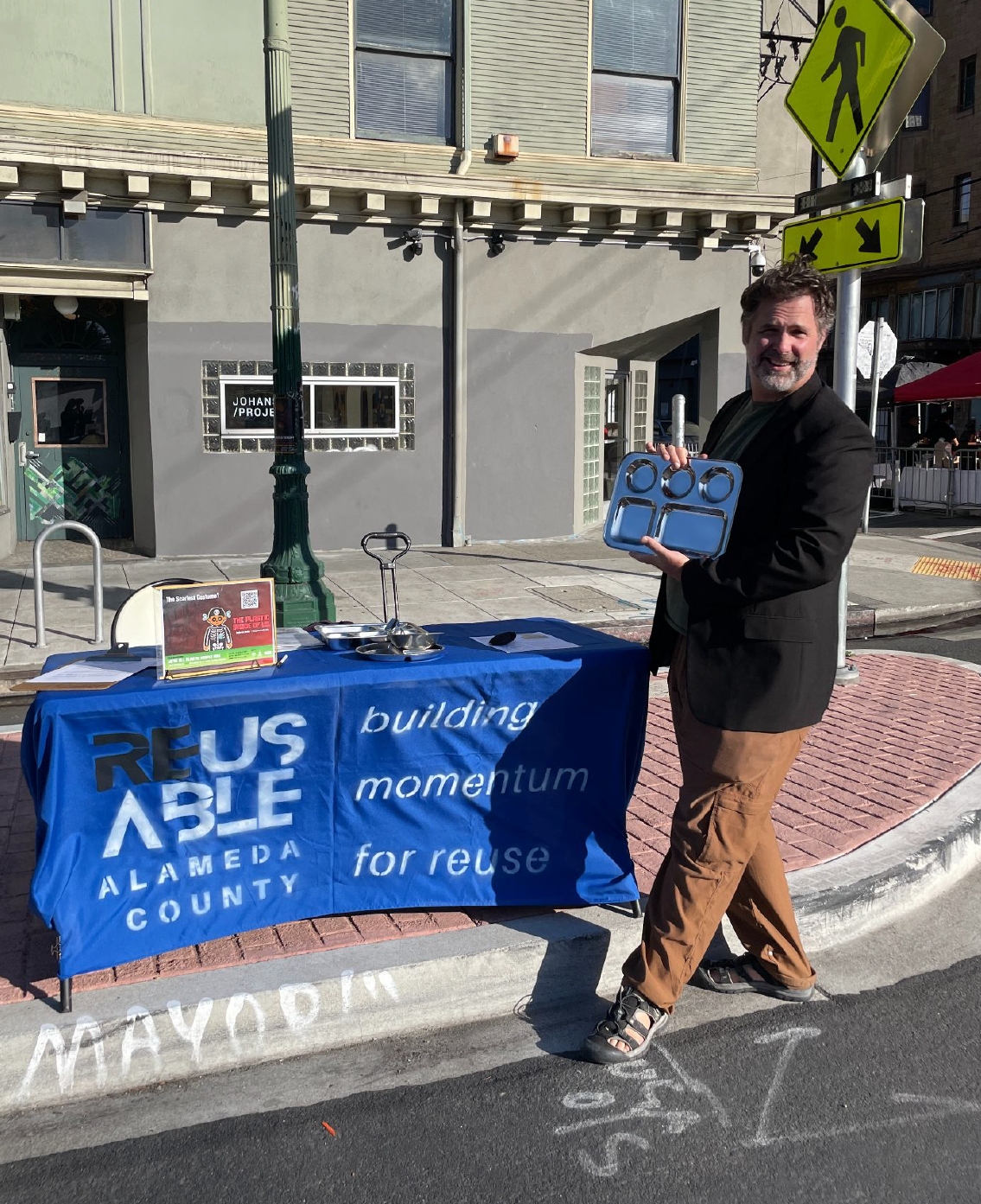
Reusable Alameda County
First Things First: Community Engagement and Education
True, corporations and high-level decision-makers should not be waiting on “consumer demand” to adopt reusable packaging. It’s also true that local upswells of engaged and educated consumers will only help reuse to scale faster.
At the same time that many reuse groups and coalitions are working to activate projects, they are also promoting awareness of the solution that reuse offers to community waste and public health issues. Leveraging social media, tabling, websites, film screenings, speaking events, and community gatherings, groups across the US and Canada are spreading messages around reuse advocacy, individual action, and a big-picture goal of cleaner, healthier communities built on reuse and zero waste.
One high-energy example: CircularSTL in St. Louis, MO convened the CircularSTL Symposium, bringing together over fifty regional leaders, businesses, municipal partners, and community organizations to chart a unified path toward a circular economy in the city. Though initiated by CircularSTL, the focus of the symposium was on cross-collaboration and stakeholder engagement.
Reuse coalitions and groups plant the seeds, but the vision is created by the broader community.
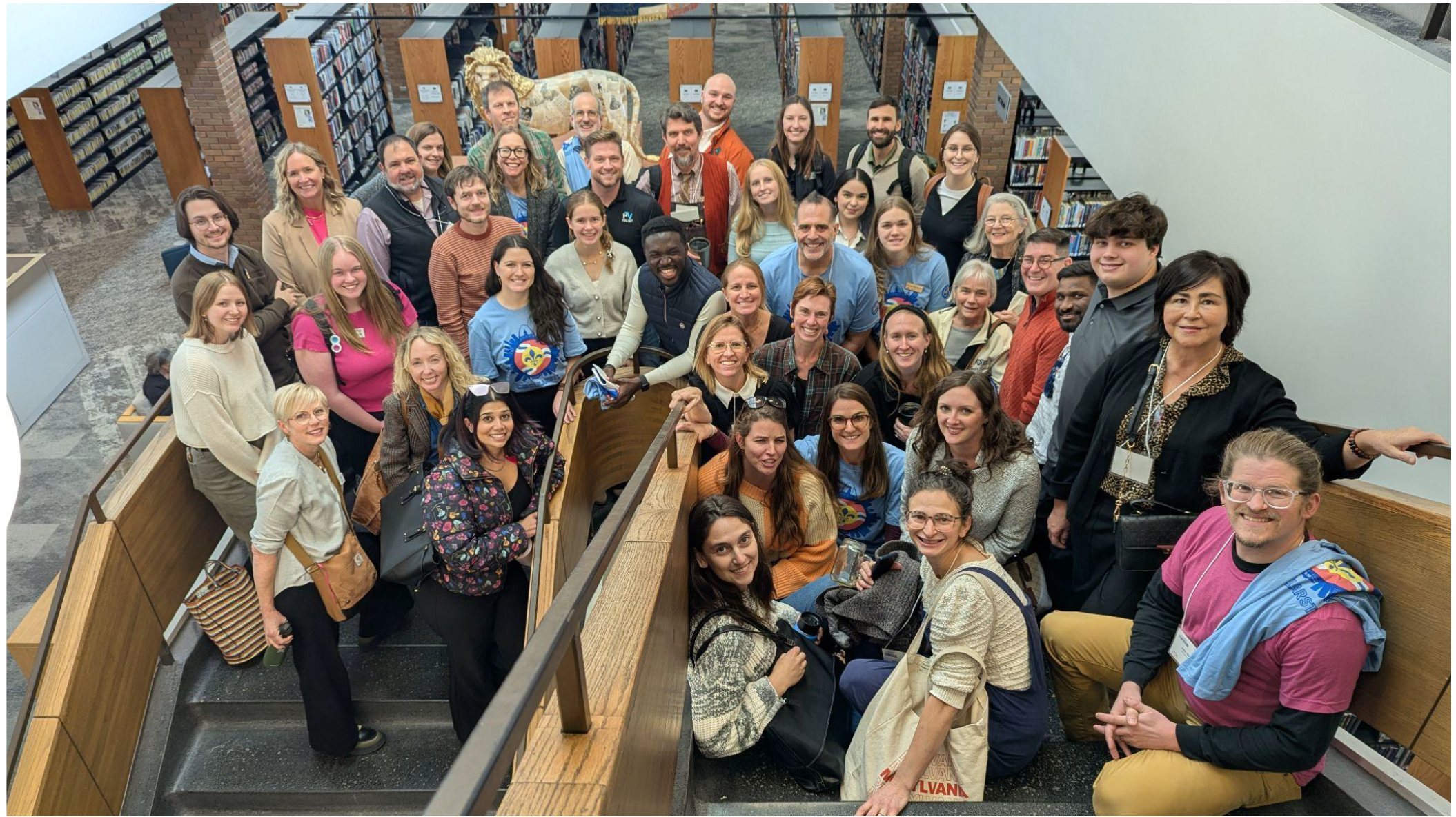
CircularSTL
Partying on with Reuse
Whether it’s an NFL game, a rock concert, or simply a kindergarten birthday party — every time people gather where food and drink is offered, trash ensues. But it doesn’t have to. We’ve got reuse service providers to cover those big events, and when it comes to community gatherings, we’ve got Party Kits — sets of party-ready reusable dishware available to “check out” like a library book.
Groups in Maui, HI; Reno, NV; and Fort Collins, CO have all worked to set up party kit networks in their communities over the past year. Project Reuse in Maui involved the local high school’s environmental club. Students took ownership of the project and ultimately worked with the school library to set up a check-out system so that classrooms, after school clubs, sports teams, and the like can enjoy celebrations waste free. Reusable Reno offers their kit both to the school district and for community events, while Fort Collins has a more robust, formalized deposit-return system set up to ensure the kits are well stewarded.
Communities that implement party kit networks are well positioned to welcome reuse at large venues as well: fans will already know the benefits of reuse and the concept of recirculating rather than tossing out foodware.
Popular Policies
To date, 100 local jurisdictions (towns, cities, counties, and districts) have passed reuse-related policies around the US and Canada.
What’s on the minds of local policy advocates these days?
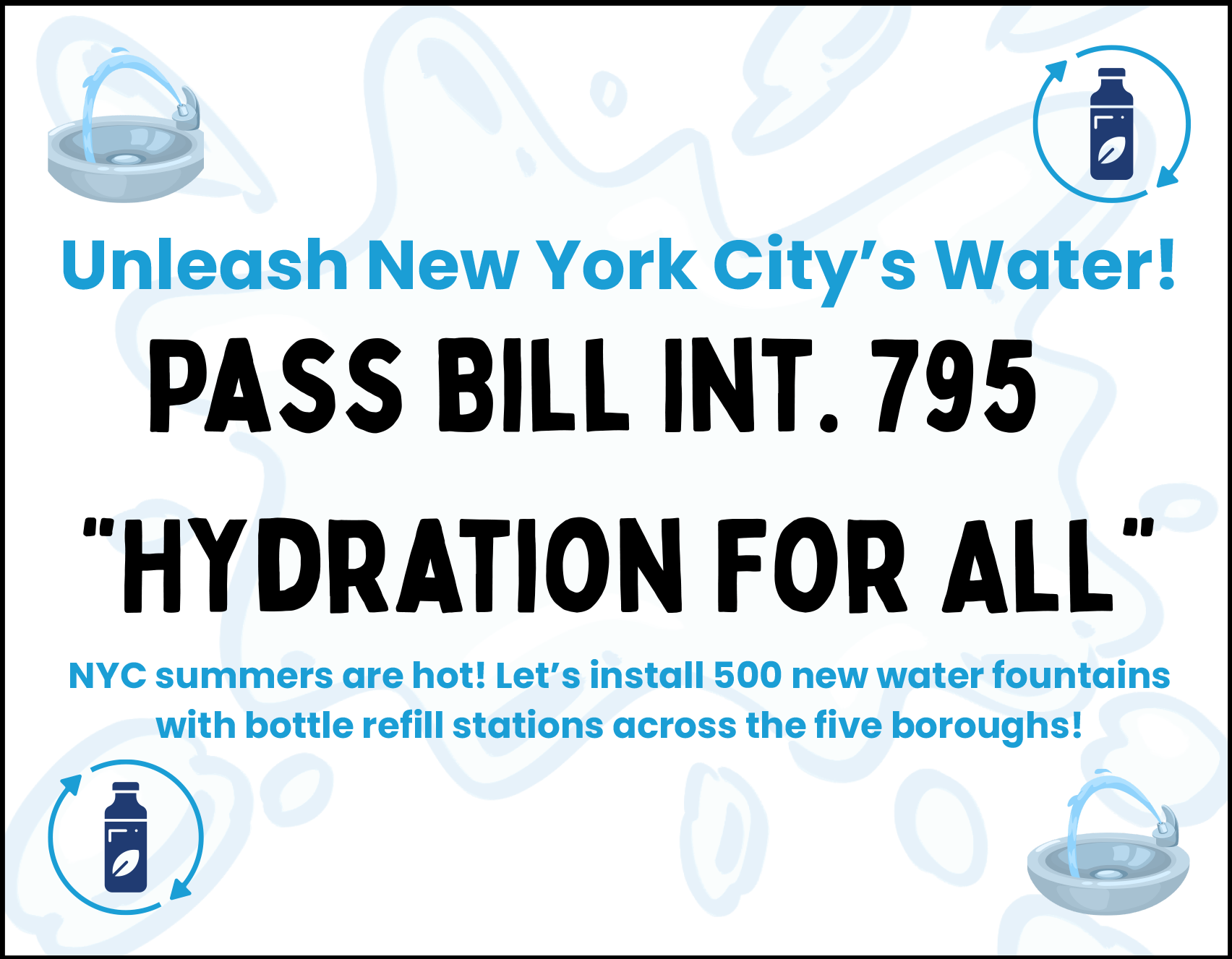
ReusableNYC campaign postcard
In New York City, it’s the The Hydration For All Act, which requires NYC to install 500 reusable bottle stations/drinking fountains equitably across the city, by 2035. Reusable NYC ran an advocacy campaign to garner support for the act — something Reusable Alameda County also did, collecting postcards in support of multiple reusable foodware policies across the County.
The Reusable Portland Coalition would also like to see more reusable foodware policies in play in Oregon’s biggest city, so they organized The Portland Reuse Summit. The conference convened policymakers and local government representatives with Portland’s business and restaurant industry, environmental groups, and reuse service providers to educate around the impact that reusable food and beverage policy could have in the area.
These reuse groups are in good company. Many coalitions are focused on engaging and educating policymakers and constituents in order to lay the groundwork for new reuse policies.
And where reuse policy has already passed — like in Los Angeles — it still must be enforced. To that end, Reusable LA created an online compliance tool for regional plastic reduction policies.
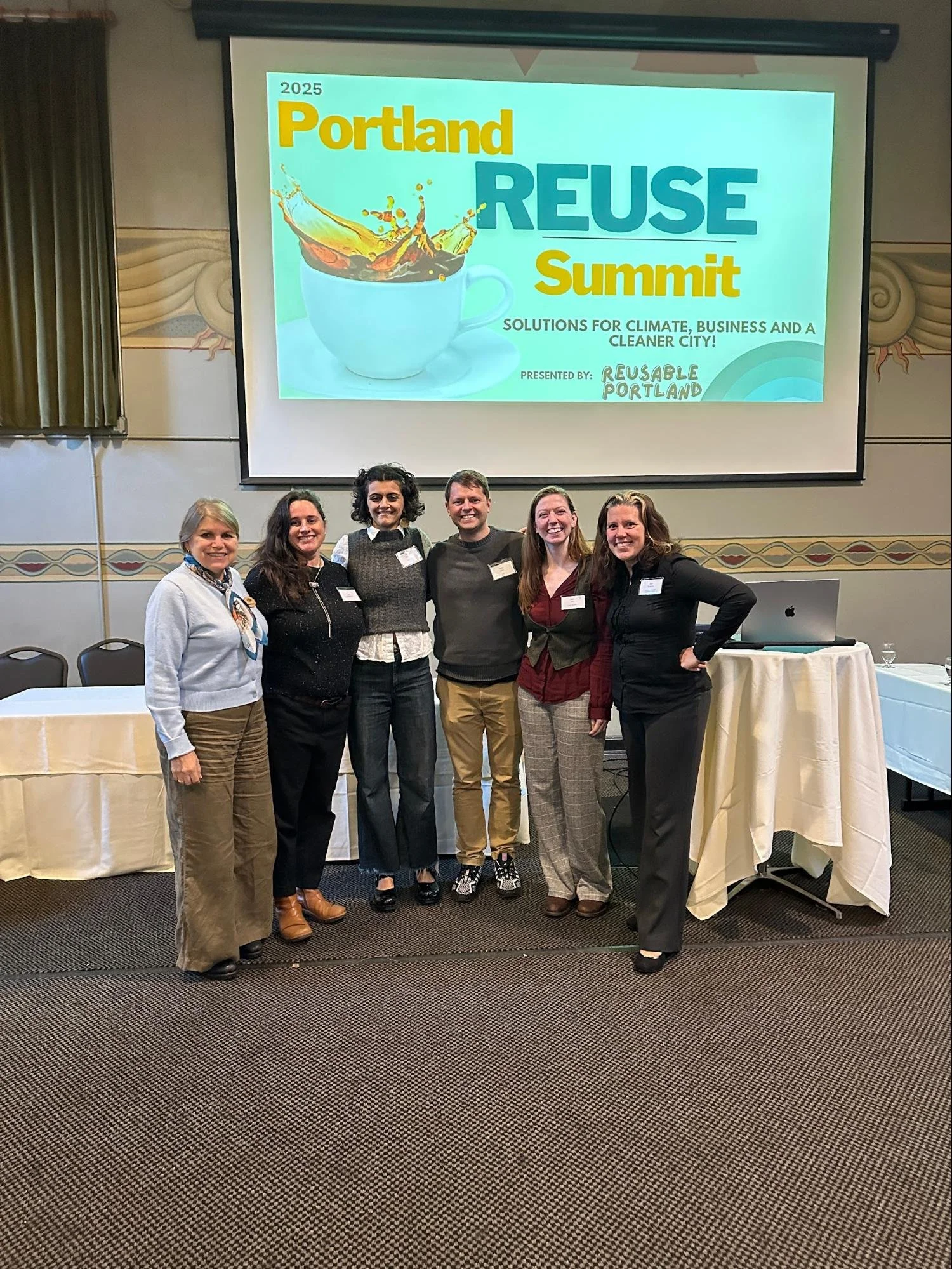
Reuse Portland
“BYO” Campaigns
While building policy support takes time and persistence — and is particularly challenging in some areas — BYO campaigns can provide “low hanging fruit” while activating a community around a common cause.
BYO campaigns involve engaging both foodservice businesses and consumers — the first step in setting up enduring reuse systems — but they do not involve the extra infrastructure or logistics required by true reuse systems. Communities from Ithaca, NY to Long Beach, CA;Marin, CA; Portland, ME; and Austin, TX are all taking this first step by encouraging customers to bring their own cups and containers — and restaurants and coffee shops to advertise their acceptance of customers’ reusables, often with a custom sticker.
Reuse Pilots
Central Ohio Reuse Coalition has taken the next step beyond BYO, to piloting the Coffee Shop Reuse Project, an open-loop reuse system with the goal of reducing disposable coffee cup waste in the Columbus area. Reuse Maine followed on their heels, helping to support a reusable foodware pilot run by UMaine — with ambitions to start their own reuse-as-a-service pilot next year. And Austin is next: the intent behind Austin Reuse Coalition’s BYO sticker campaign is to act as a lead-in to a larger open-loop cup program.
Toronto, in the meantime, has been focused on testing the waters for reuse at community-based events. Coalition members of Reusable Toronto have been creating guides for implementing reuse programs and sorting waste as a way to encourage even more reuse at local events — expanding on the pilots and projects already going in the city.
Growing Momentum, Growing Reuse
When Upstream started the Reuse Solutions Network in late 2019 (then known as the National Reuse Network), it had fewer than 100 members. Now, a quick six years later, we’re at over 1,500 strong. Independent reuse-focused groups and coalitions have grown from fewer than a dozen to over 35 across the US and Canada.
This activation is occurring in tandem with a growing reuse industry, increasing reuse uptake from sports and entertainment venues, and statewide packaging regulation beginning to take off. We are now in a place where these broader trends and grassroots momentum are mutually reinforcing — accelerating reuse at the community level and beyond, simultaneously.
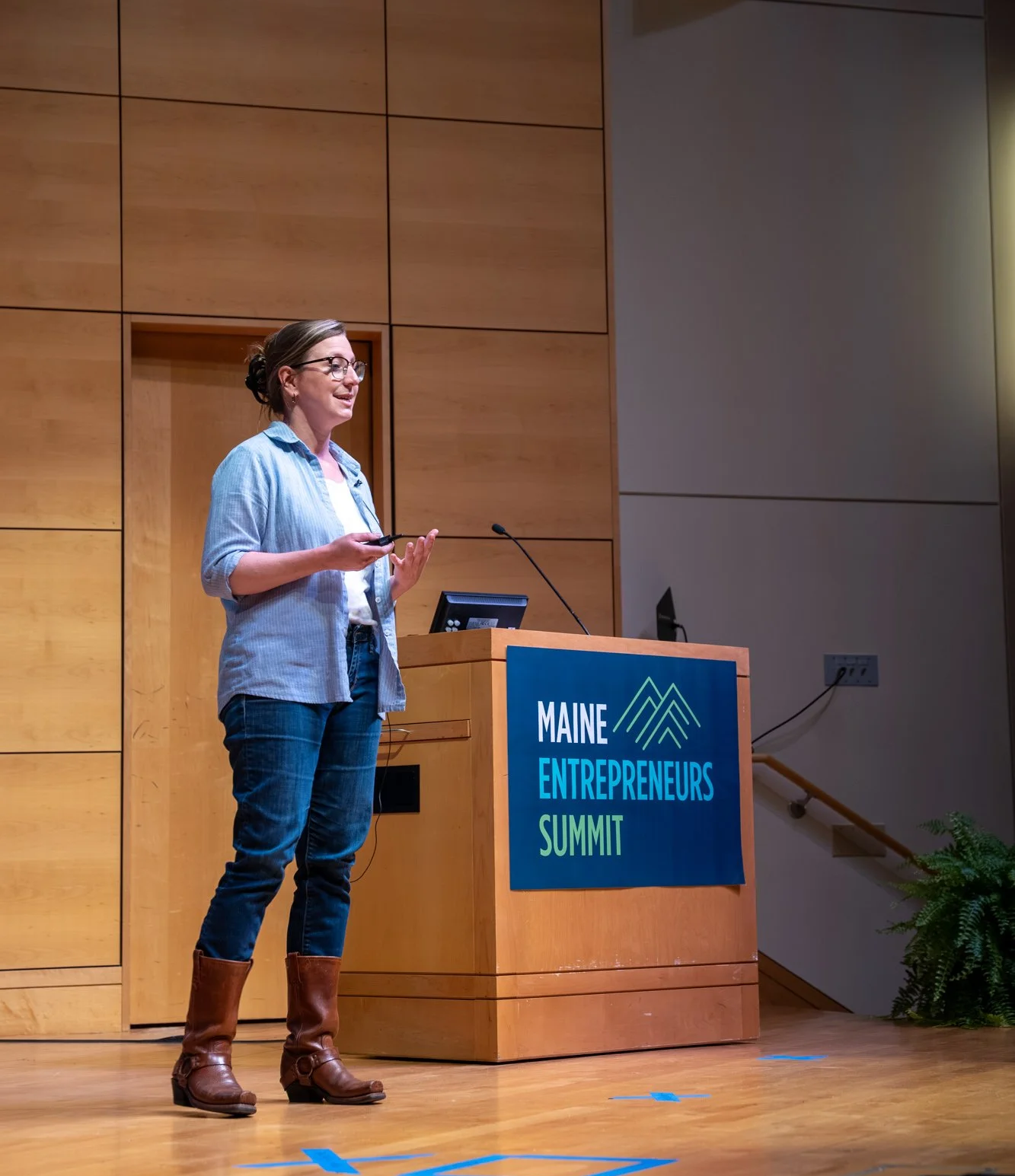
Reuse Maine at the Maine Entrepreneurs Summit