
Making the Switch:
How Venues Decide to Integrate Reuse Into Their Business Operations
If you’ve ever wondered what factors influence venues’ decision to switch from single-use to reusable serviceware, you’re not alone. Upstream investigated this complex question by talking with the folks who interact daily with reuse systems and oversee their implementation—reuse service providers, venues, and foodservice companies. We identified several readiness factors determining venues’ preparedness to adopt reuse strategies.
The venue is located in an area with an enabling policy environment.
The venue has a vocal customer base.
The venue has a strong understanding of the return on investment of reusable serviceware.
The venue has the capacity to train their staff on reuse.
The venue has a willingness to partner with reuse service providers.
The venue has an environmentally-inclined department that makes decisions regarding reuse.
Understanding the Critical Factors in Adopting Effective Reuse
With generous support from the U.S. Department of Energy as part of the Re-X Before Recycling Prize, Upstream sought to investigate the critical factors for venues to switch from single-use serviceware to reusable serviceware. To better understand these factors, Upstream engaged directly with those who interact daily with reuse systems and oversee their implementation: reuse service providers, venues, and foodservice concessionaires.
After interviewing ten reuse service providers, two venues, and three foodservice companies with varying levels of experience with reuse, Upstream identified several readiness factors for venues to adopt reuse strategies. Venues should be located in an area with an enabling policy environment and a vocal customer base. They should also have a good understanding of return on investment, the ability to train and incentivize staff, and the willingness to partner with reuse service providers—especially if a venue has an environmentally-driven department of operations and logistics. By identifying these readiness factors, reuse service providers and other reuse advocates can better target venues that may be more receptive to implementing reuse systems.
This report summarizes the current perceptions of the critical factors in implementing reuse systems in high volume, closed-loop venues. Reuse operations may differ between venues depending on contextual nuances. However, these collective perspectives concerning decision-making processes and key success factors represent a valuable framework to advance reuse.
Executive Summary
Single-use food and beverage serviceware poses significant financial, environmental, and health costs, and exponentially so in high-volume venues. Reusable packaging, on the other hand, provides an opportunity to reduce waste, save money, and improve customer satisfaction. While an increasing number of venues have implemented reusables in the past several years, most have yet to adopt a reuse system. The expansion of the reuse sector and a venue’s ability to integrate reusable packaging systems into their operations involves two key components. First, venues must agree to using reusables in their unique operational context, which requires buy-in from decision-makers. Second, after the initial agreement to implement such a system, a reuse system must be designed for optimal efficiency and effectiveness.
Using qualitative interviews from reuse service providers; high volume, closed-loop venues; and foodservice companies, Upstream learned that the primary decision-makers are departments that deal with logistics and operations, concessionaires, and the C-Suite—all guided by sustainability departments. These entities can be convinced to adopt reuse with strong data regarding return on investment, customer satisfaction, and return rates—plus policies that mandate or incentivize reuse. Once venues decide to adopt reusables, reuse service providers should ensure that staff are properly trained and motivated to participate in the reuse system, and the system should be incrementally implemented through an opt-out model.

These findings demonstrate a venue’s readiness to transition from single-use serviceware to reusable serviceware. A venue is best ready to integrate reuse into their operations if:
The venue is located in an area with an enabling policy environment
The venue has a vocal customer base
The venue has a strong understanding of the return on investment of reusable serviceware
The venue has the capacity to train their staff on reuse
The venue has a willingness to partner with reuse service providers
And, the venue has an environmentally-inclined department that makes decisions regarding reuse.
Given such factors, reuse service providers and advocates should target high volume, closed-loop venues that display these characteristics. In doing so, high-volume reuse contracts can catalyze the development of reuse infrastructure, with a broader goal of making that infrastructure more readily available for other sectors to leverage environmental and economic benefits.
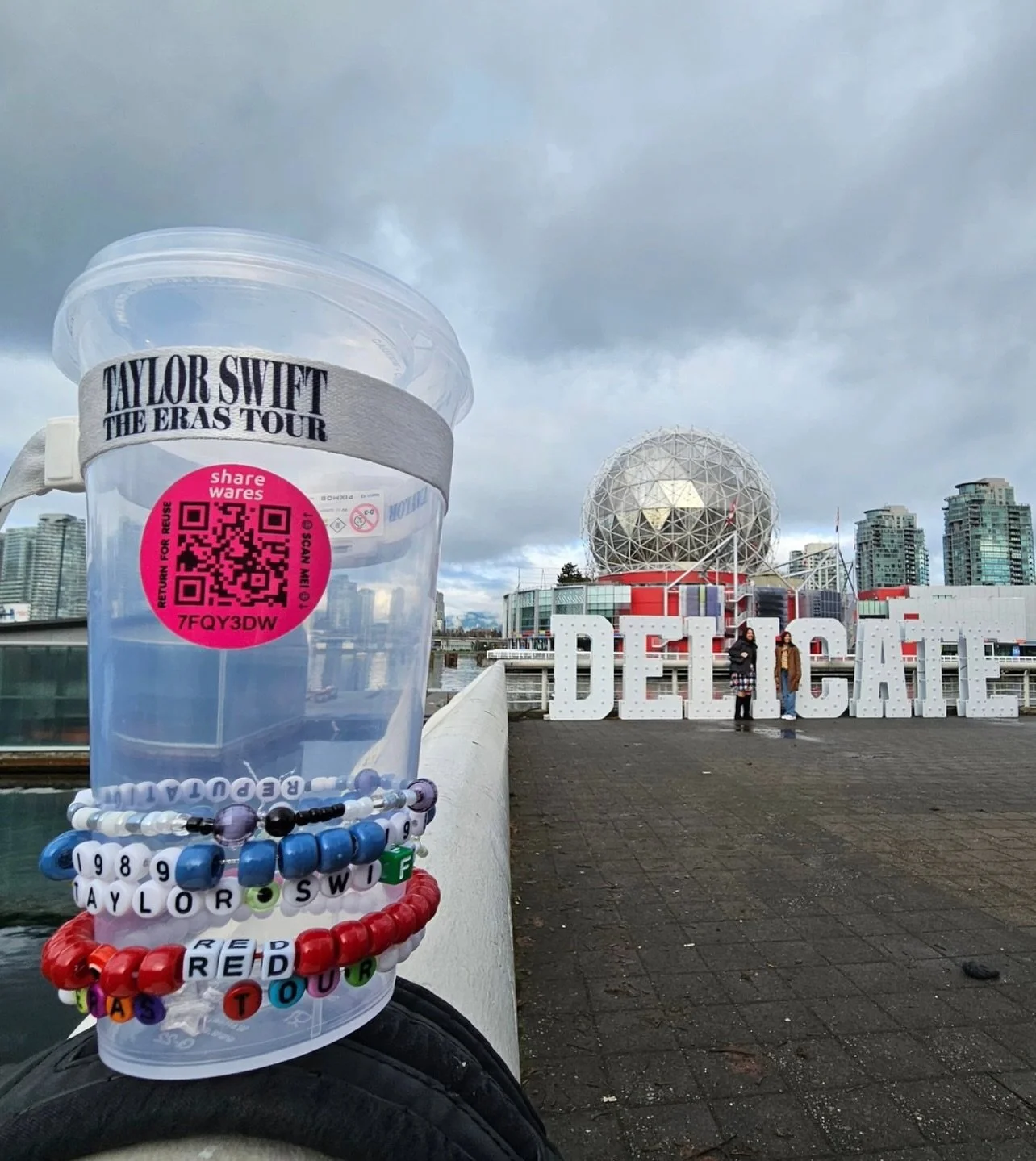
image: ShareWares
With our sincerest gratitude, we would like to thank the following reuse service providers, venues, and foodservice companies. With your insights, the reuse movement is a step closer to understanding how to identify the venues that are ready to transition from single-use to reuse.
Reuse Service Providers:
Bold Reuse
Buoy
Deliver Zero
Echo Systems
Friendlier
r.World
Recirclable
ReDish
Reuso
Sharewares
Venues:
National Park Service
San Francisco Airport
Foodservice Companies:
Delaware North
Levy
Sodexo